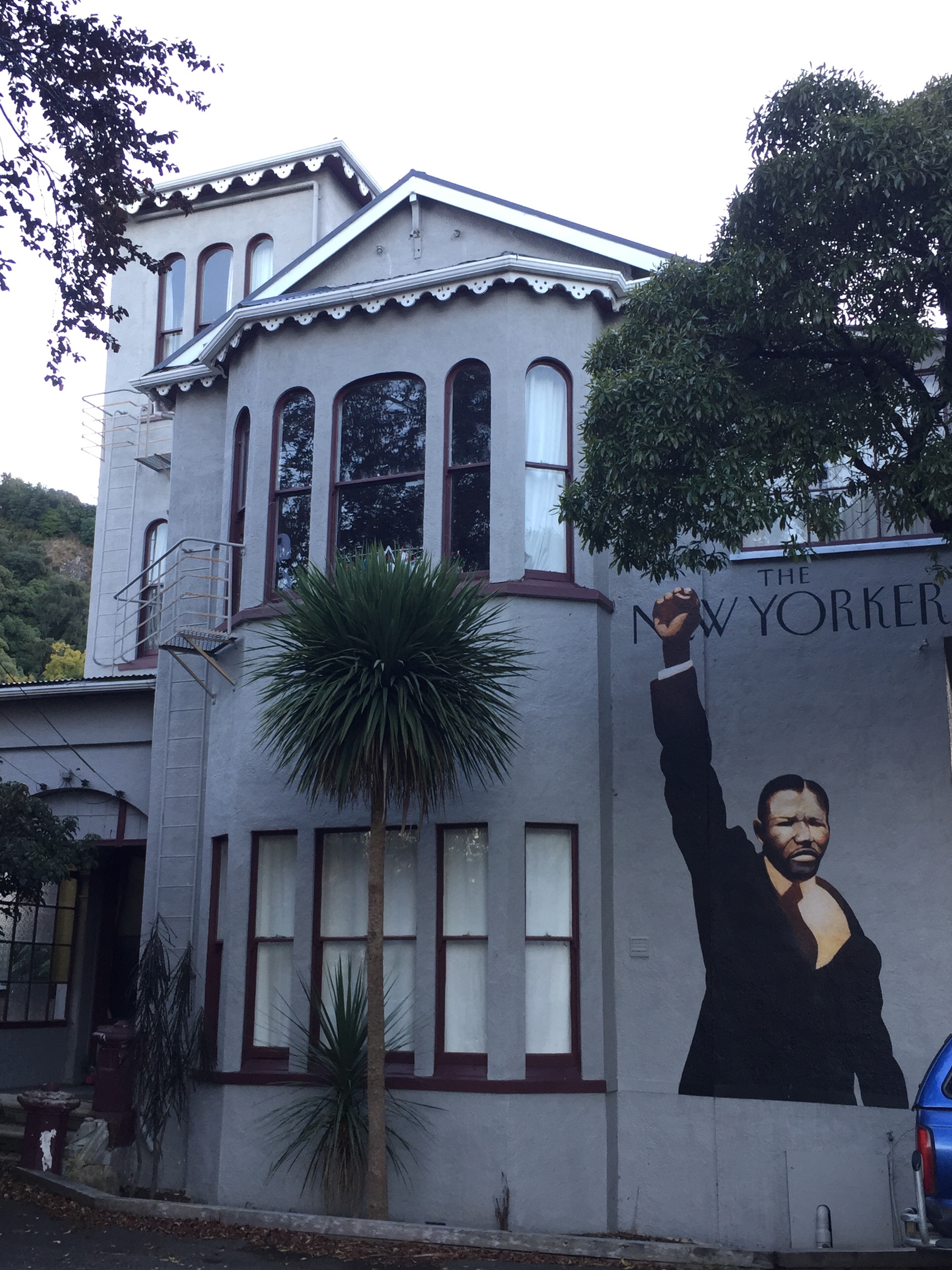
The New Yorker on Queen Street

Displaying a stunning image of Nelson Mandela from the cover of The New Yorker on December 16 2013, a tribute issue published a week after his death.

The Huffingdon Post reported the upcoming cover on May 12 2013 and had this to say about it: “The cover is entitled, “Madiba,” Mandela’s tribal name, and is the artwork of author and artist Kadir Nelson. Nelson, who has illustrated a children’s book on Mandela, told the New Yorker that he drew this cover to reflect a young Mandela “during the time that he was on trial with over a hundred of his comrades.”

“I wanted to make a simple and bold statement about Mandela and his life as a freedom fighter,” he said. “The raised fist and the simple, stark palette reminded me of posters and anti-apartheid imagery of the nineteen-eighties. This painting is a tribute to the struggle for freedom from all forms of discrimination, and Nelson’s very prominent role as a leader in the anti-apartheid movement.”

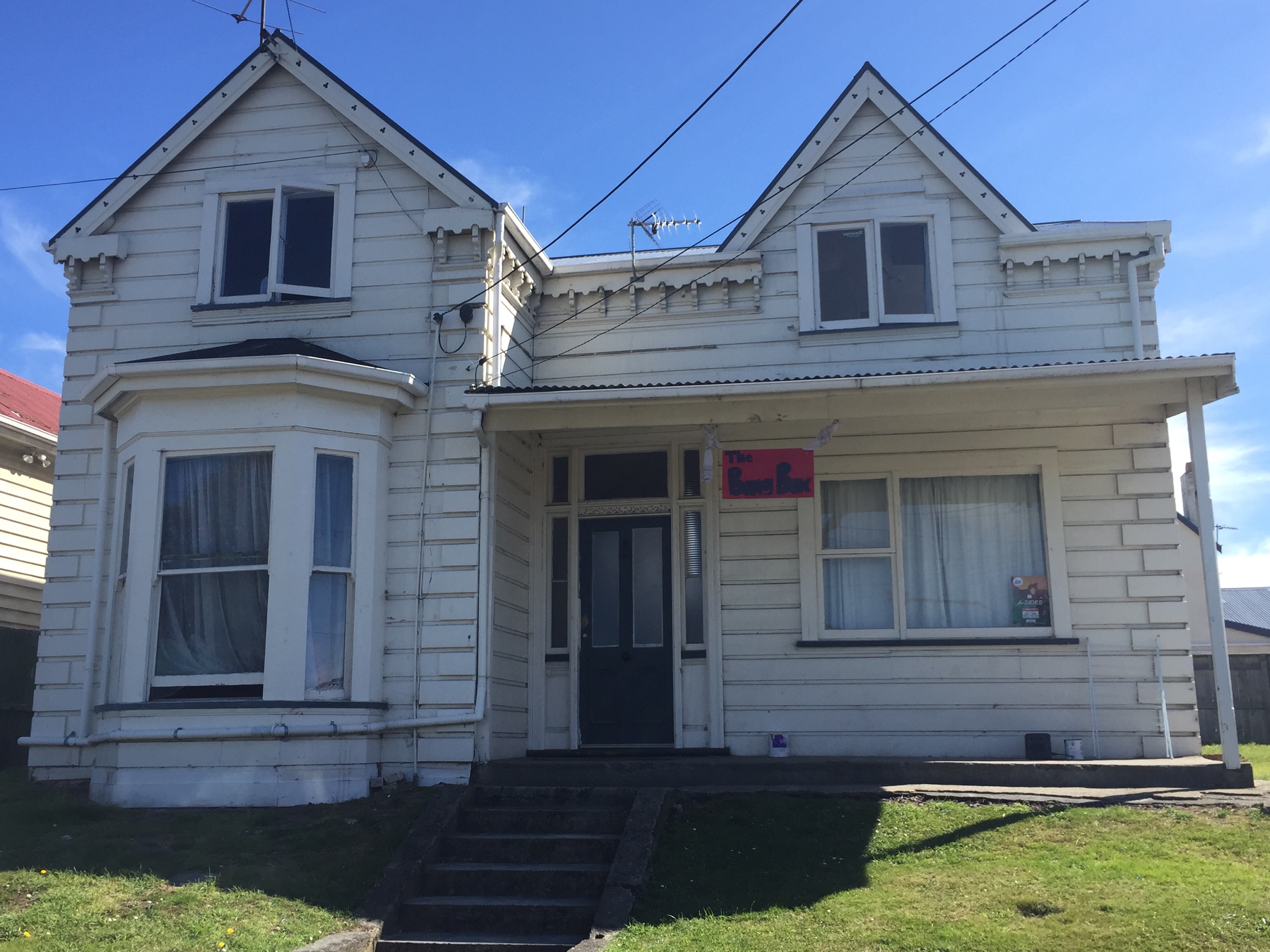
The mural at the Queen Street residence was commissioned by the owner (2014-2015) and was painted by local Dunedin artist Greg Lewis.

Onomastics / names and naming : the Tektonomastics Project

I recently learned of a field of study called onomastics, the study of names (how perfect) there are also has sub-disciplines: geonomastics or toponomastics (the naming of places) and anthroponomastics (the study of personal names). I wondered if there was a field of research that investigated the more specific naming of houses. While waiting on a couple of onomastics books to arrive at the library, I came across the Tektonomastics project.

“Tektonomastics” is a made-up word, combining “tekto-” — Greek for “building” — with “onomastics” — the study of the history and origin of proper names. [1]

For this project Haruka Horiuchi and Frank Hebbert created a new word, Tektonomastics, to describe their field of inquiry – the origin of building names. Their project entails the mapping of named residential buildings in New York both through their own efforts and through crowdsourcing.

This article from Daily Design Idea details their criteria for inclusion and the process they have developed. I really like how they have presented their data both in the map and inventory, and the visualisation of their taxonomy of building names is inspired. Its provided me with a great deal of inspiration for the Dunedin Flat Names Project.

4-name-types-diagrams-525x405

Taxonomy of residential buildings in New York

It is not surprising, but by looking at this visual representation of their taxonomy I can immediately see the student flats of Dunedin have quite a different taxonomy – what is evident is that naming a building provides a sense of identity and belonging.


References

[1] Tektonomastics: the building names project
http://urbanomnibus.net/2010/10/tektonomastics


The making of signs

Generally students make their own signs for their flats, and usually they are made from whatever is readily and cheaply available. Signs vary enormously in their design and the materials used to construct them. Lack of availability of tools and cash for raw materials mean signs are often fairly basic in their design and limited in their execution.

However, there have been inventive materials used over the years, including headboards, cupboard doors, villa doors, white boards, skateboards and planks from beer crates. Sometimes the name is spray painted on a vinyl couch, or written in liquid chalk or vivid (permanent marker) on a window. More recently materials like vinyl type and 3D letters have become more affordable and can be seen in some signs. The creativity students display in the creation of signs is one of the aspects I really enjoy about this project.

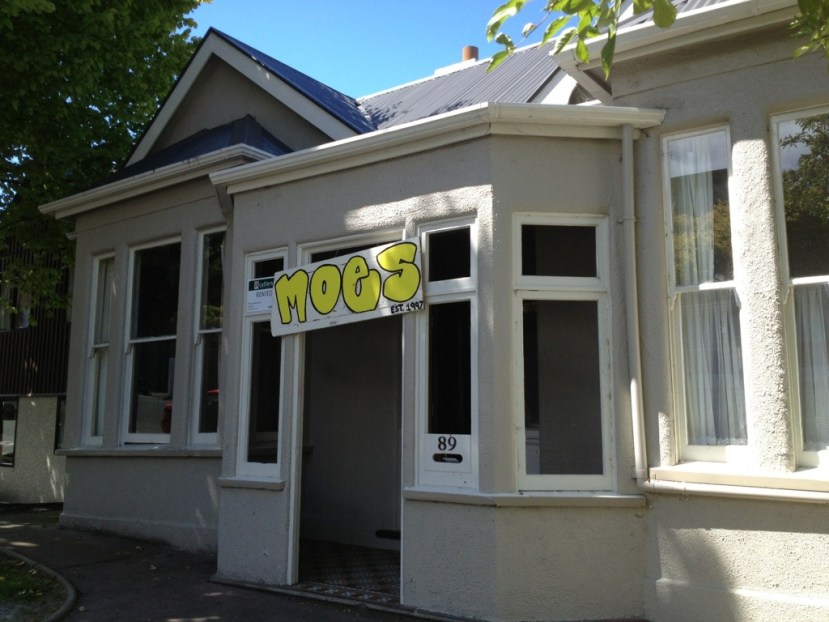
Moe’s is a good example of a named flat, while it is currently without a sign, that has had a variety of signs in it’s 19 year history. The sign below was made using a cupboard door, this sign replaced a yellow skateboard (surely a reference to Bart’s skateboard on The Simpson’s?!) with “Moe’s” spray painted on it in black.
20140213-071101.jpg

Moes, 89 Clyde Street (2013). 

Some students and landlords commission the construction of signs, usually from a commercial outfit, but a new (to me at least) market has emerged. Recently I met Jasper, a 4th year student, who for the last three years has been making flat signs on commission. Jasper constructs the signs at home in the family garage where he has access to tools and materials over the summer break, fitting this in while also working full-time.

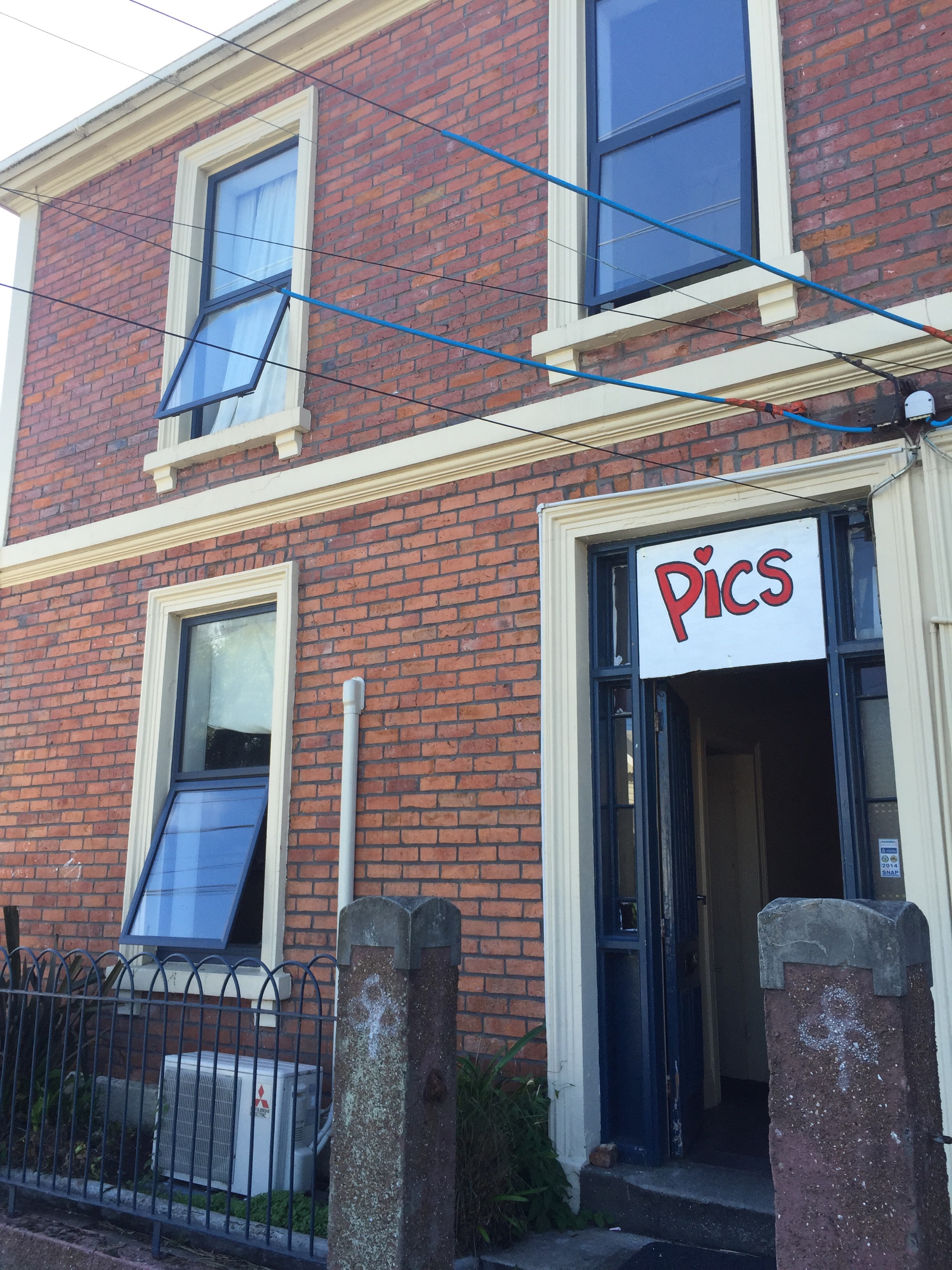
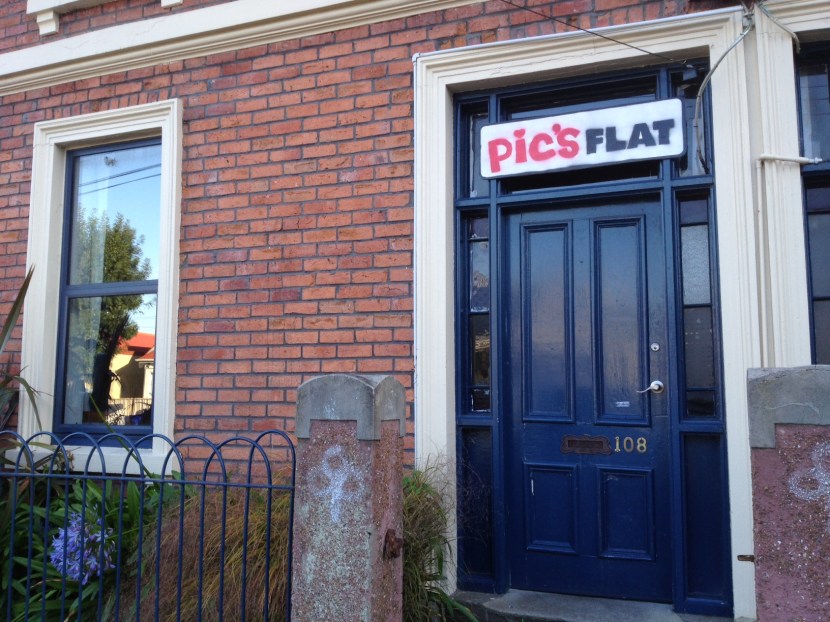
He has a couple of years of flatting experience behind him, but his most memorable flat is his first which was named. We all know it – Pics’s Flat. Inspired by The V Flat across the road on Dundas Street, the flatmates approached Pics Peanut Butter for sponsorship. After consulting with their landlord Jasper created the sign which was screwed into the lintel over the door. This was the first sign he made; it has since been stolen.
Pic's Flat

Pic’s Flat, 108 Dundas Street (2014)

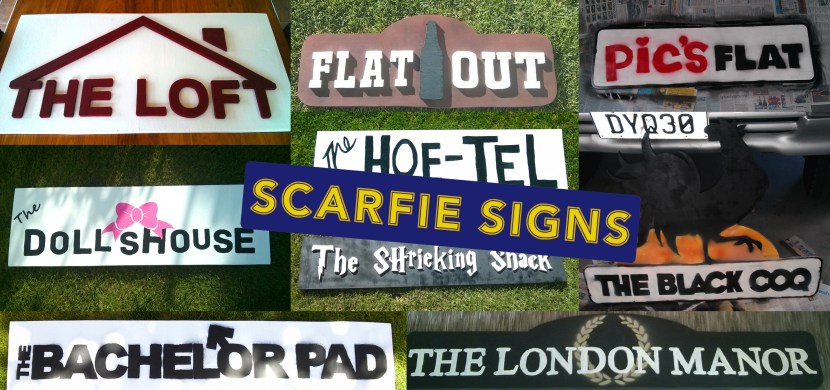
To date Jasper has made about 12 signs and has designed several more. He advertises at the end of the year on Otago Flatting Goods Facebook page and students usually approach him with a name in mind – he said the majority are interesting, unique names. Jasper consults with the residents, mocks up the design in Photoshop offering a couple of alternative designs and once it’s signed off, he builds the sign. Some of the designs can be fairly complex, like the Shrieking Shack (stolen last year) which involved using a jig-saw to cut out each letter. The Hoe-tel, another of Jaspers creations on Castle Street, was stolen and he remade the sign for the residents based on a photo they sent him.

Occasionally a landlord is also involved in the design process. Recently a pair of flats on Leith Street commissioned a flat sign (apparently the landlord’s idea); the sign-off on the name and design required the agreement of the 12 female residents (split across two flats) and the landlord. That flat is The Dolls House on Leith Street.
Flat signs collage

Collage of signs. Source Jasper Fawcett. Used with permission

Given that several of the signs Jasper has made have been stolen I wasn’t surprised to hear that he thinks the signs should stay with the flats. Often signs stay in-situ, sometimes students take them to their next flat where they may or may not be displayed. It raises the question why someone would steal student flat signs when they are so easily identifiable … is there a collector out there?

I was interested in Jasper’s opinion on why students name their flats. He said that in his experience, students leaving halls often first look for flats with names to rent because it’s cool to live somewhere with a name and it’s easier (and more fun) to refer to your flat by name than by street number. He believes most landlords are ok with the practice because it attracts students to the property. He feels that flat signs are part of the student culture here in Dunedin.

Students certainly do refer to flats by name and use them as a mechanism of way-finding. On my way in to campus to meet Jasper, I overheard a conversation between two students on Howe Street.

Student 1: “Are you doing anything tonight?

Student 2: “Yeah, I’m going to that party on Leith Street.”

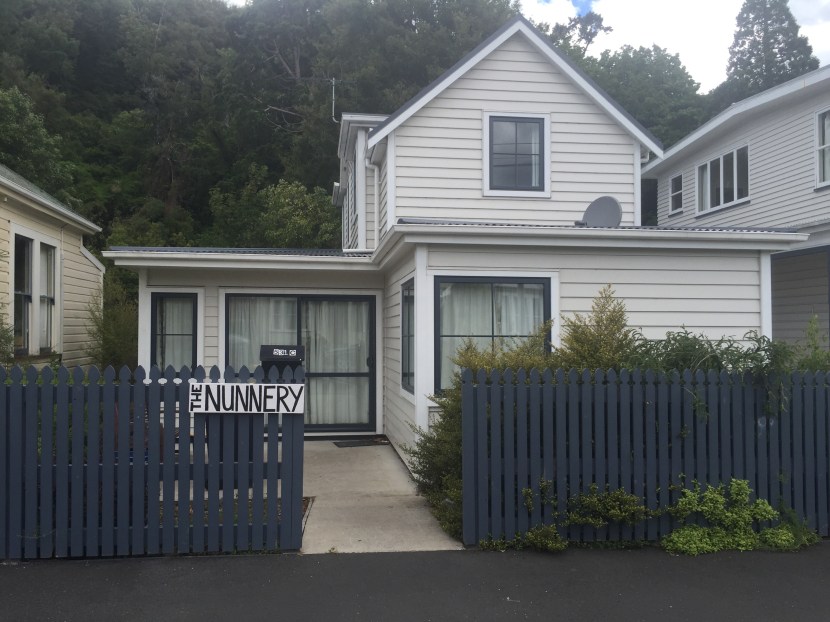
Student 1: “At The Nunnery?”

Student 2: “Yeah.”
IMG_5780

The Nunnery, Leith Street (2015)
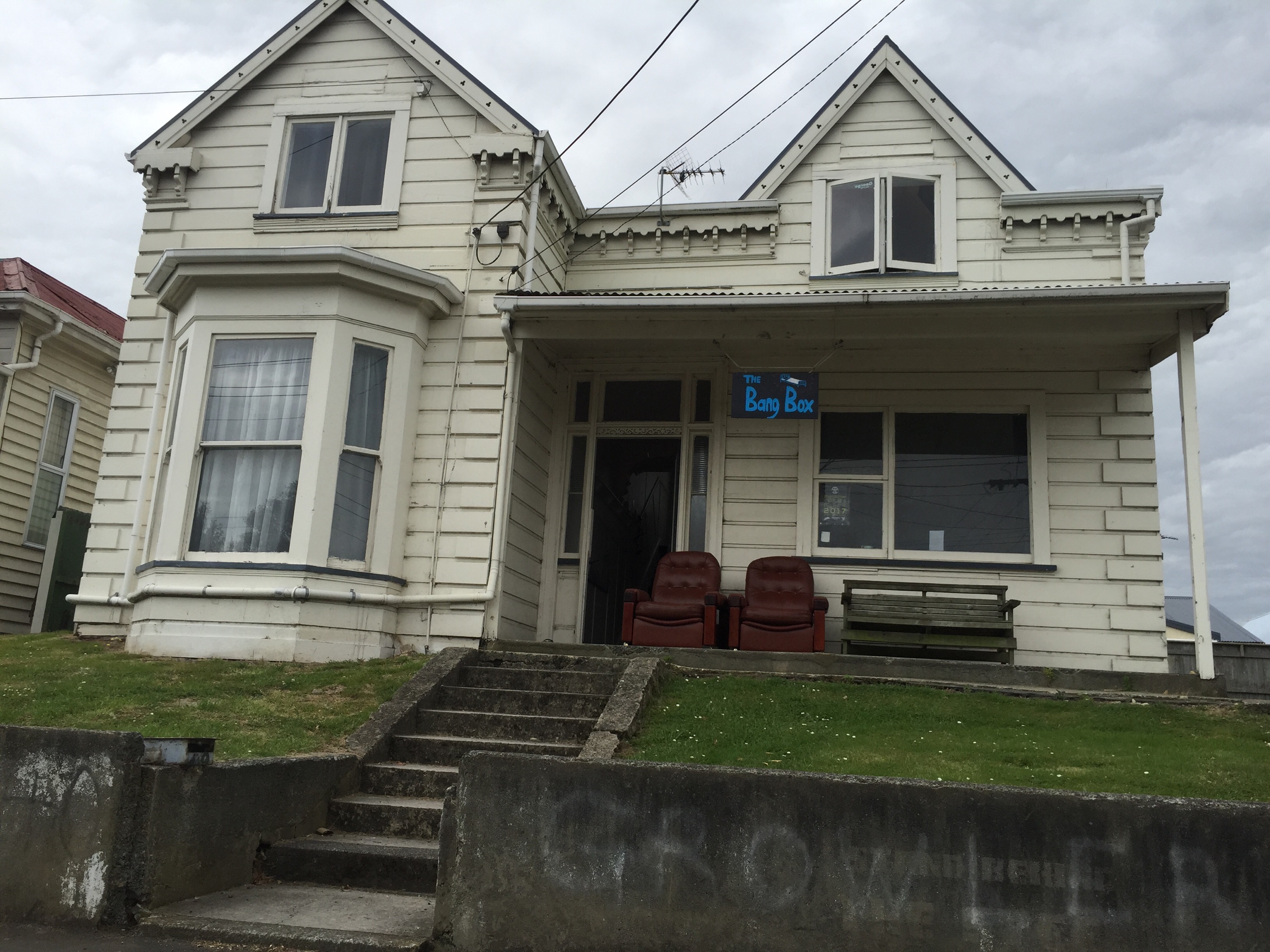
Balcony collapse on Castle Street at Six60 gig

It’s the worst. It’s not something you ever want to experience or have anyone else experience, but it has happened. We often see students hanging out on roofs and balconies during parties, but this evening, during a Six60 gig on Castle Street, a balcony collapsed. Many people were hurt and nine seriously enough to be taken to hospital.

There’s been plenty of news and social media posting about the accident which I’ve collected here in this Storify.

I sincerely hope that everyone who has been injured will recover quickly and that they receive the support they need. Please get in touch with OUSA and Student Health Services if you need to, and do check in with your families.


Woody’s On George Street

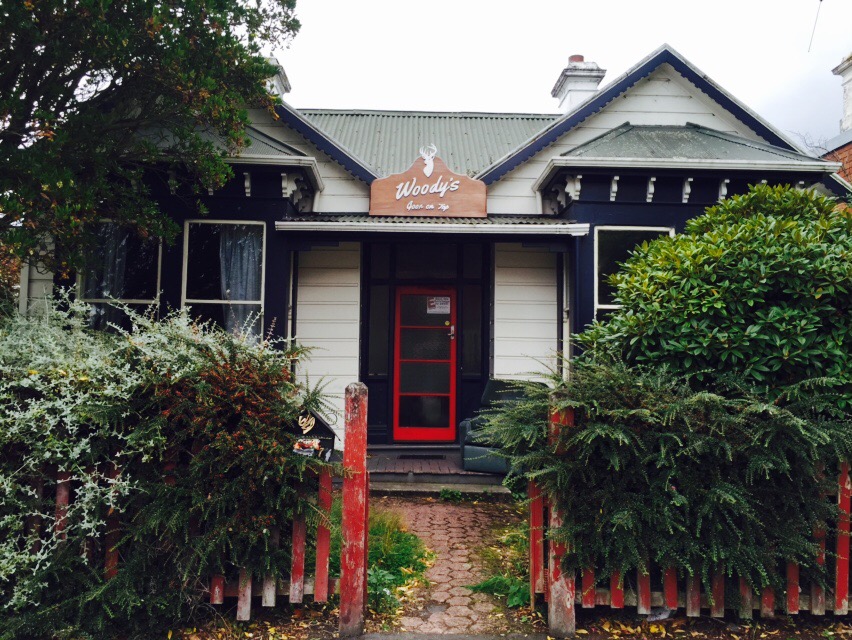
An impressive sign made from a single bed headboard, metal stags head and cursive script reading, “Woody’s Goon on Tap”.

A goon, or bag in a box, or wine cask, was invented in 1965 by Thomas Angove, of Angove Family Winemakers from Renmark in South Australia. His son recalls when he first mooted the idea of a plastic bag full of wine in a box:

“I remember dad coming home with this sort of prototype of a plastic bag inside a cardboard box and I remember thinking to myself and I probably said it to dad ‘That’s crazy, nobody will buy wine in a plastic bag stuck inside a cardboard box’, but in his usual manner he persisted,” he said.

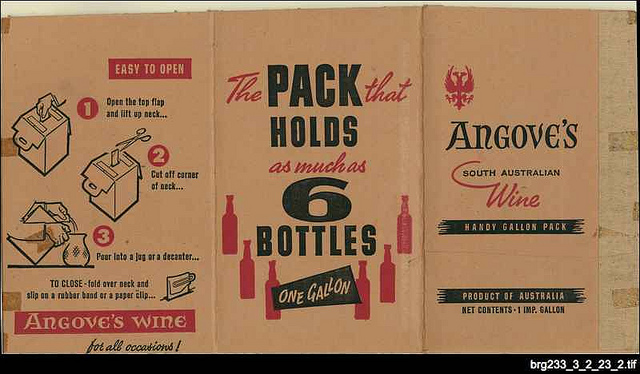
7081654917_2420cc2c07_z

Angove’s wine cask by Innovation Australia CC BY SA

This image shows the original method for decanting the wine from the cask. This design was added functionality by Penfold’s in 1967 when they added a tap to the goon bag. Angove’s wine cask had it’s 50th birthday last April.

The goon is a more affordable means of buying wine, and has become a feature of drinking sessions – anyone partaken in a “goon before noon”?

Big wine cask by Pete Johns

Big wine cask by Pete Johns CC BY NC ND