Category: 2010s
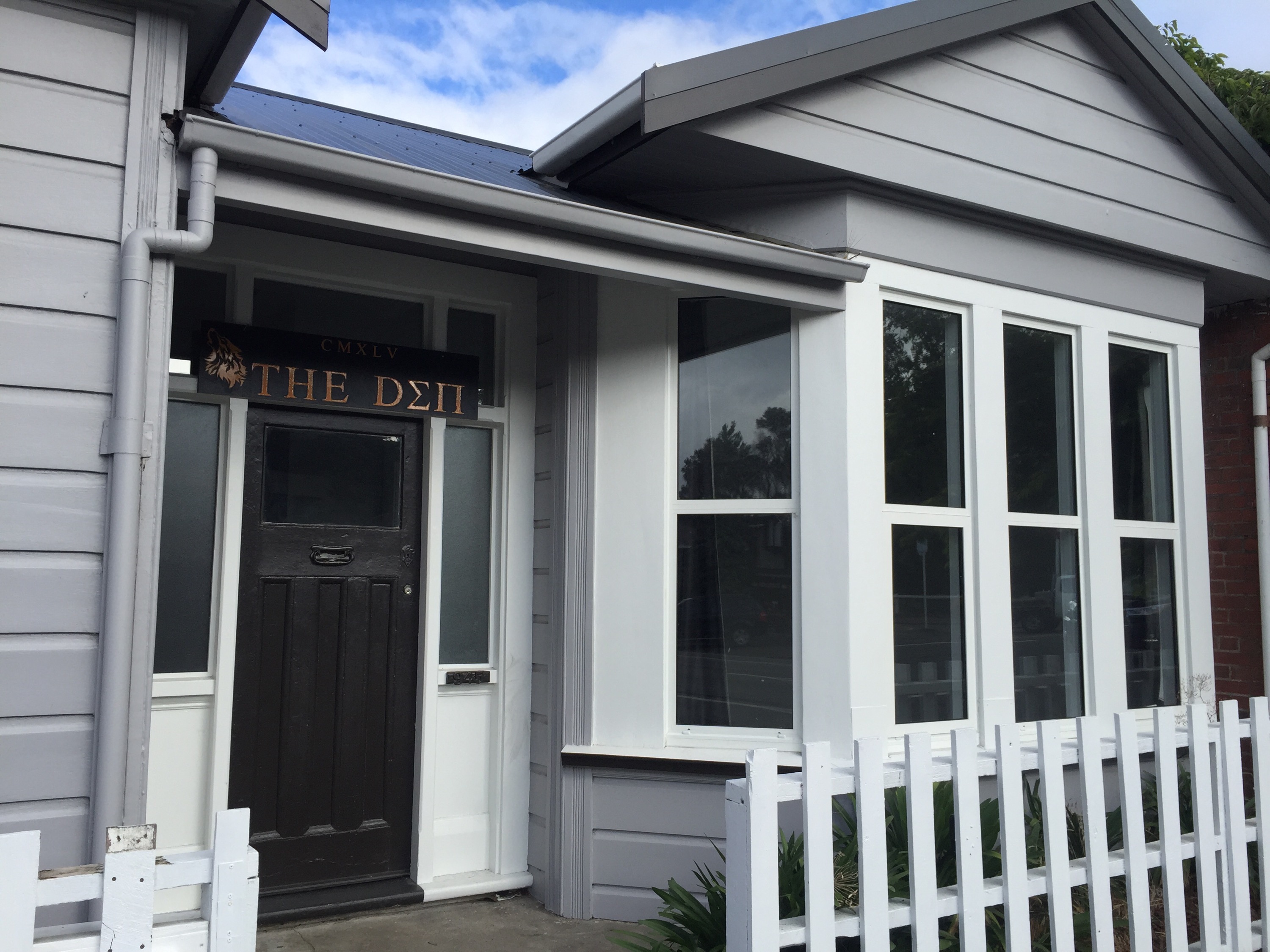
The DΣΠ on Cumberland Street
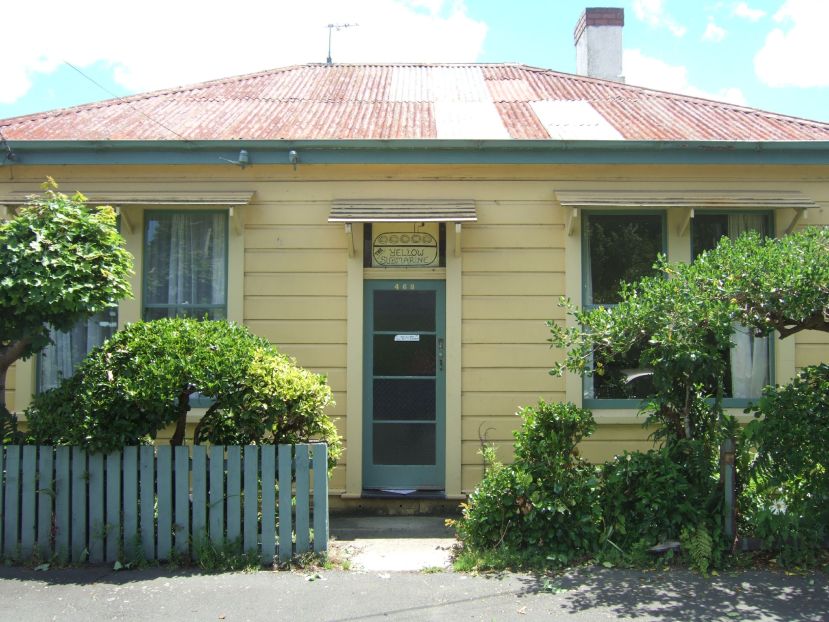
Yellow Submarine on Leith Street
The Yellow Submarine is an example of a name that reflects the physical state, or appearance of the building; in this instance, the colour. This flat name has been around for nearly a decade and in the last couple of years it’s original sign has been replaced by the submarine model on the side of the house.

The house originally sported a rather fetching sign in the window above the door (below – 2007).
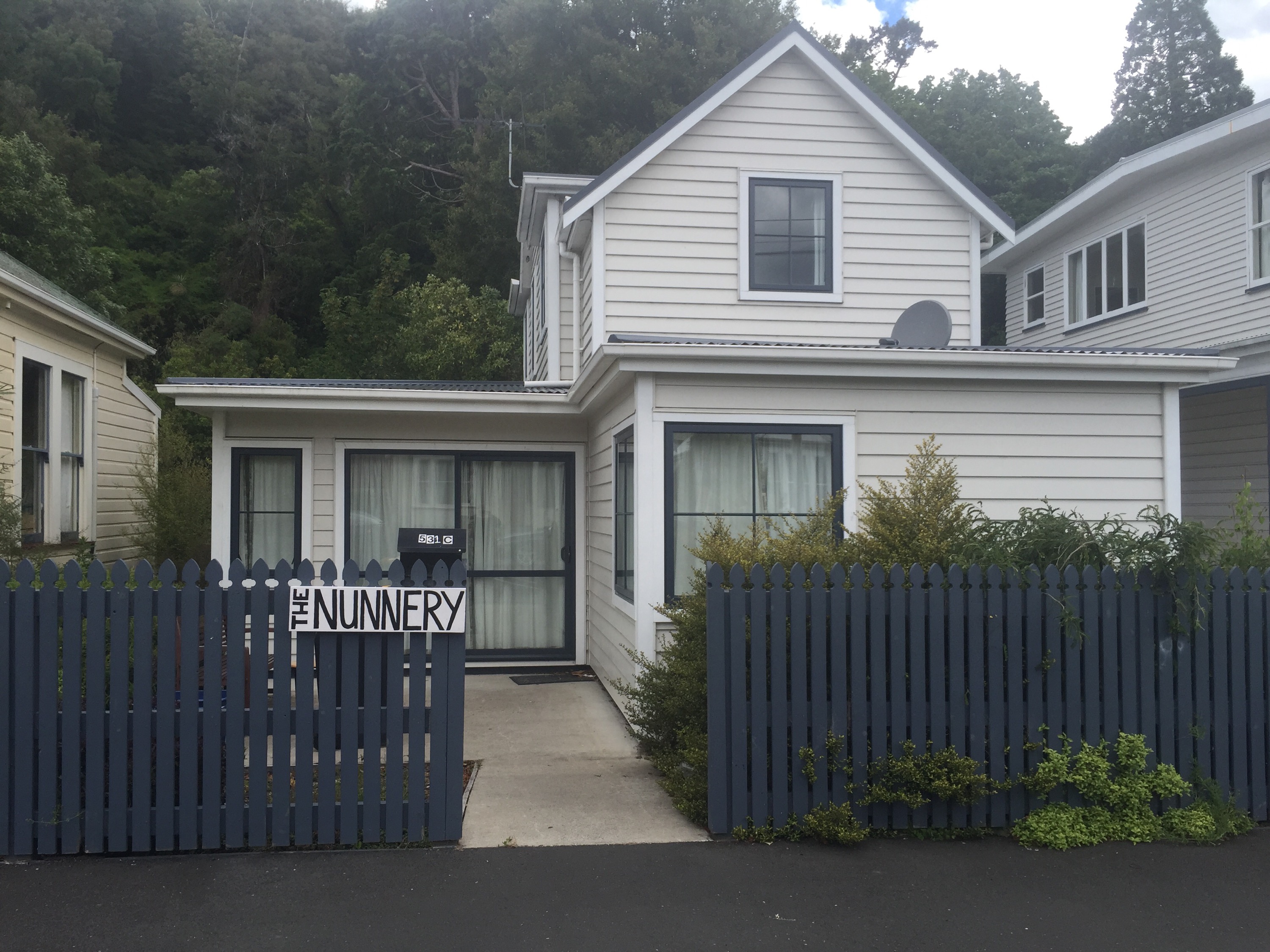
The Nunnery on Leith Street
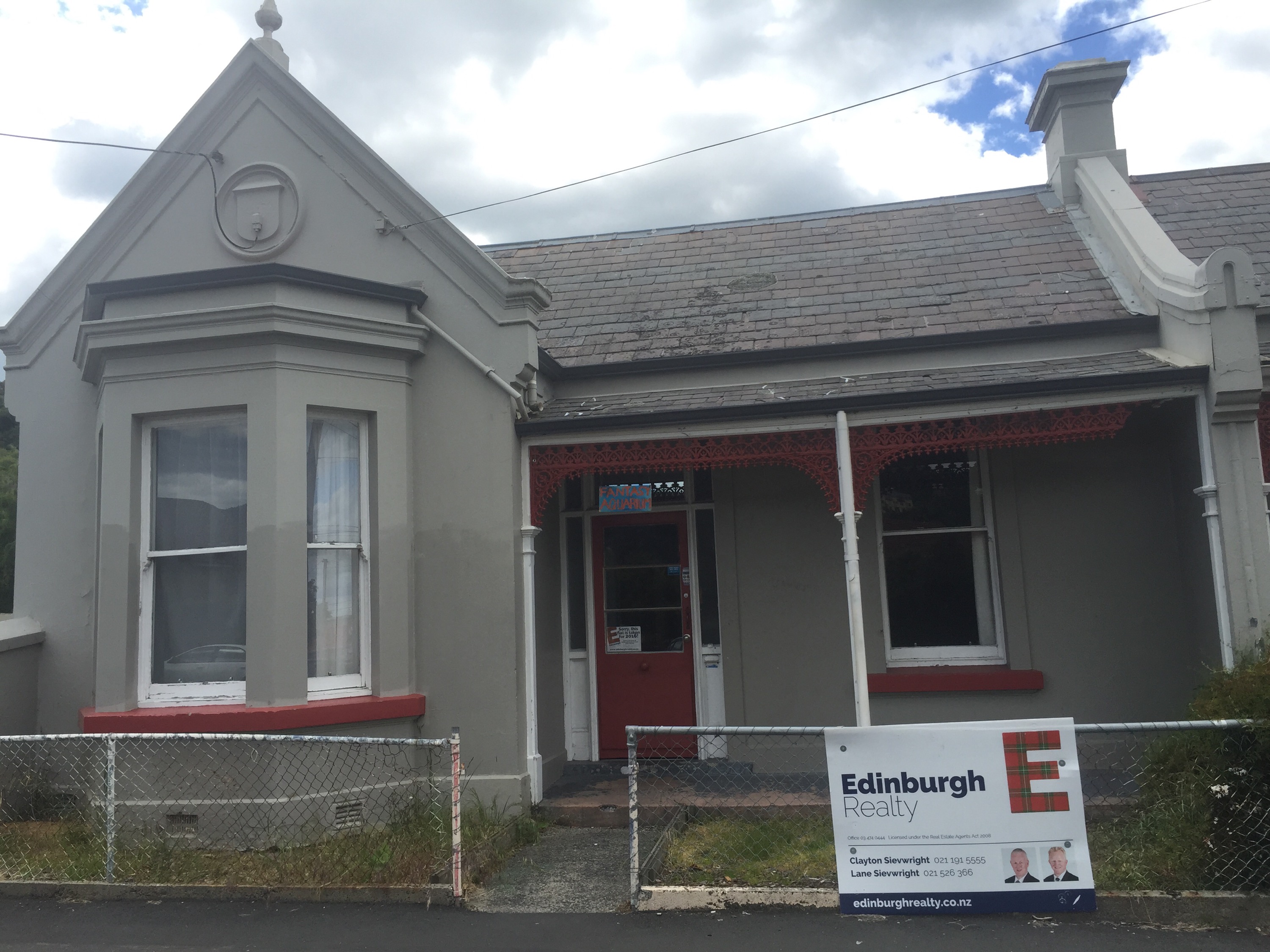
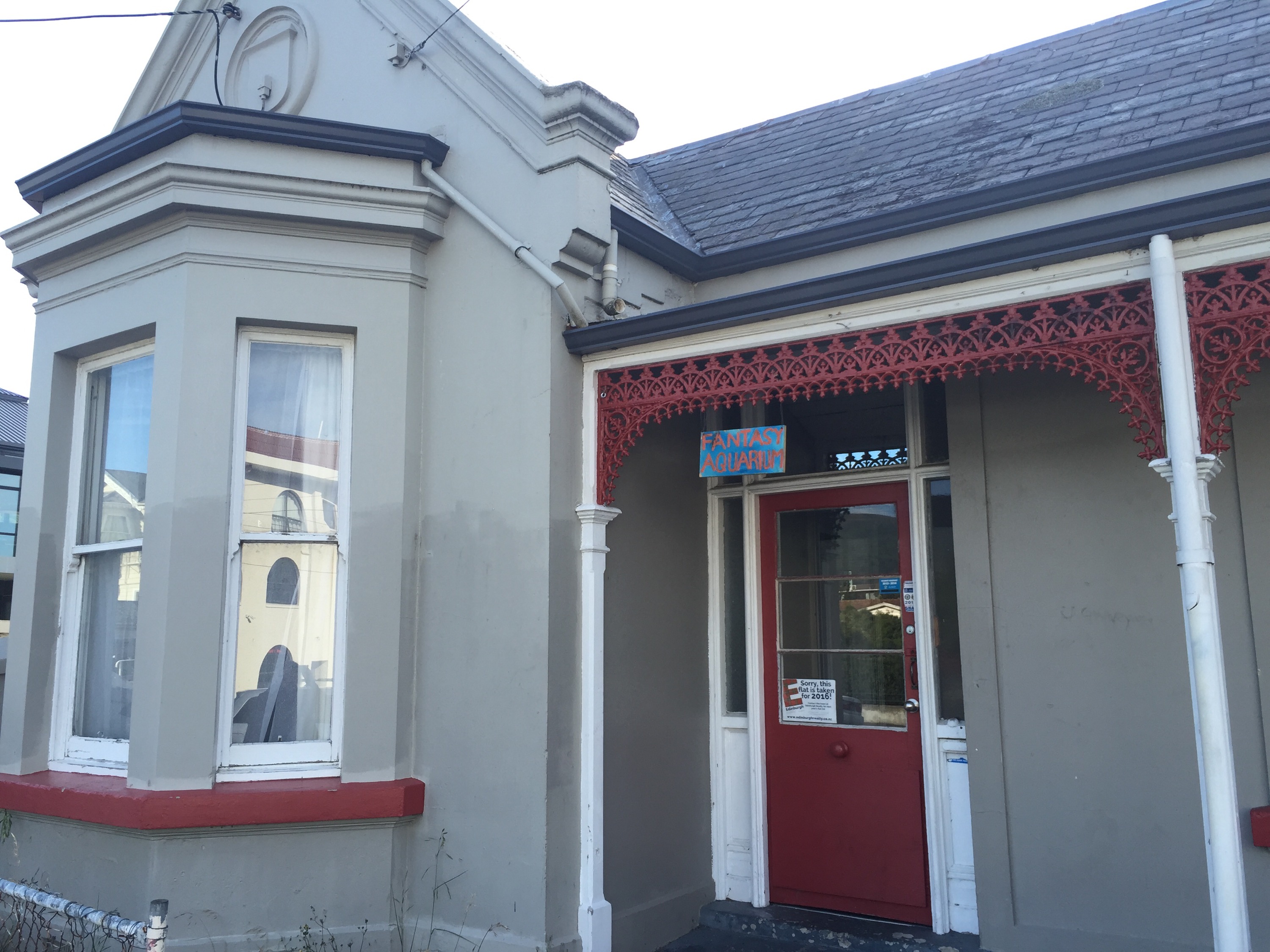
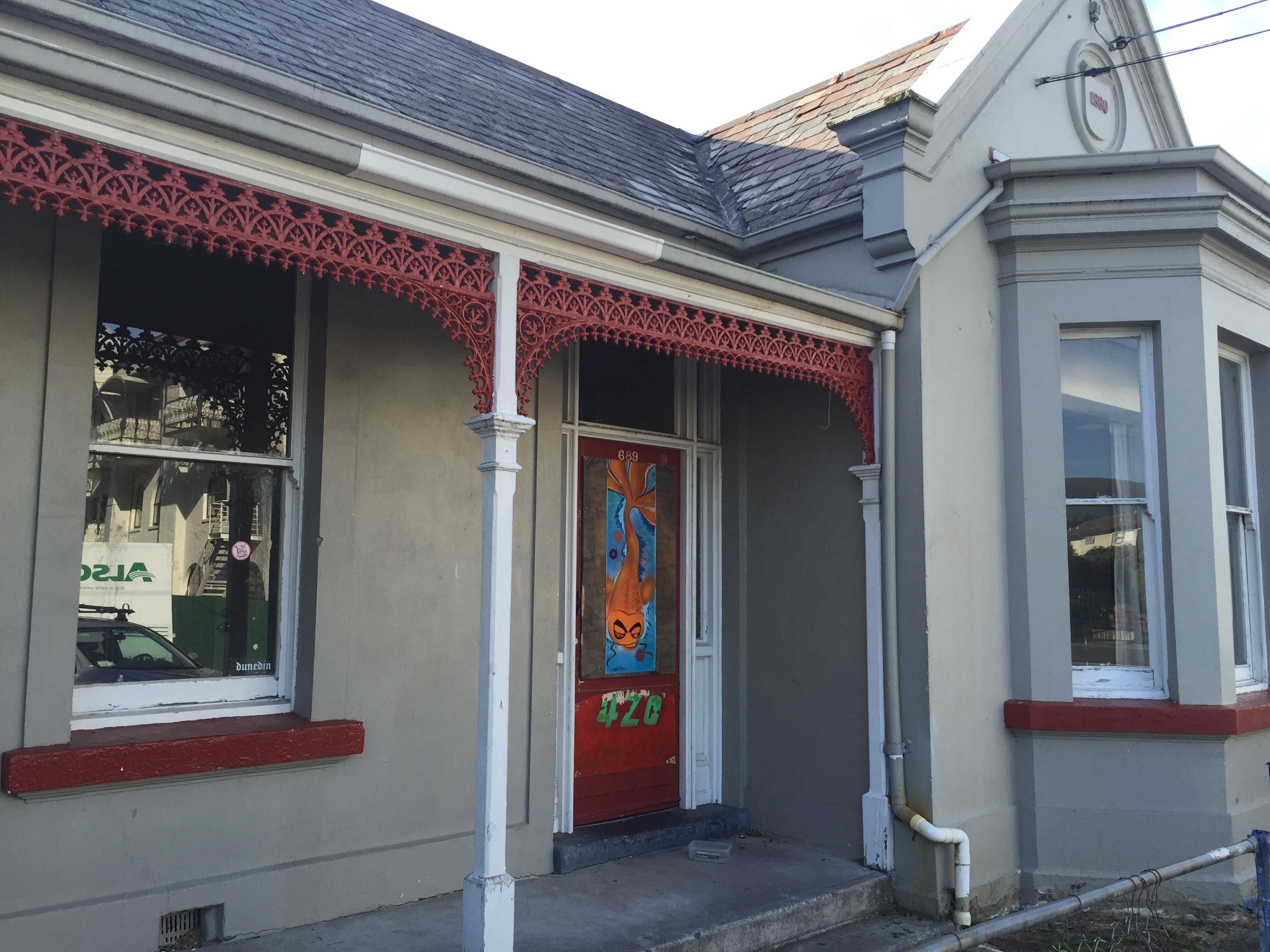
Fantasy Acquarium on Castle Street
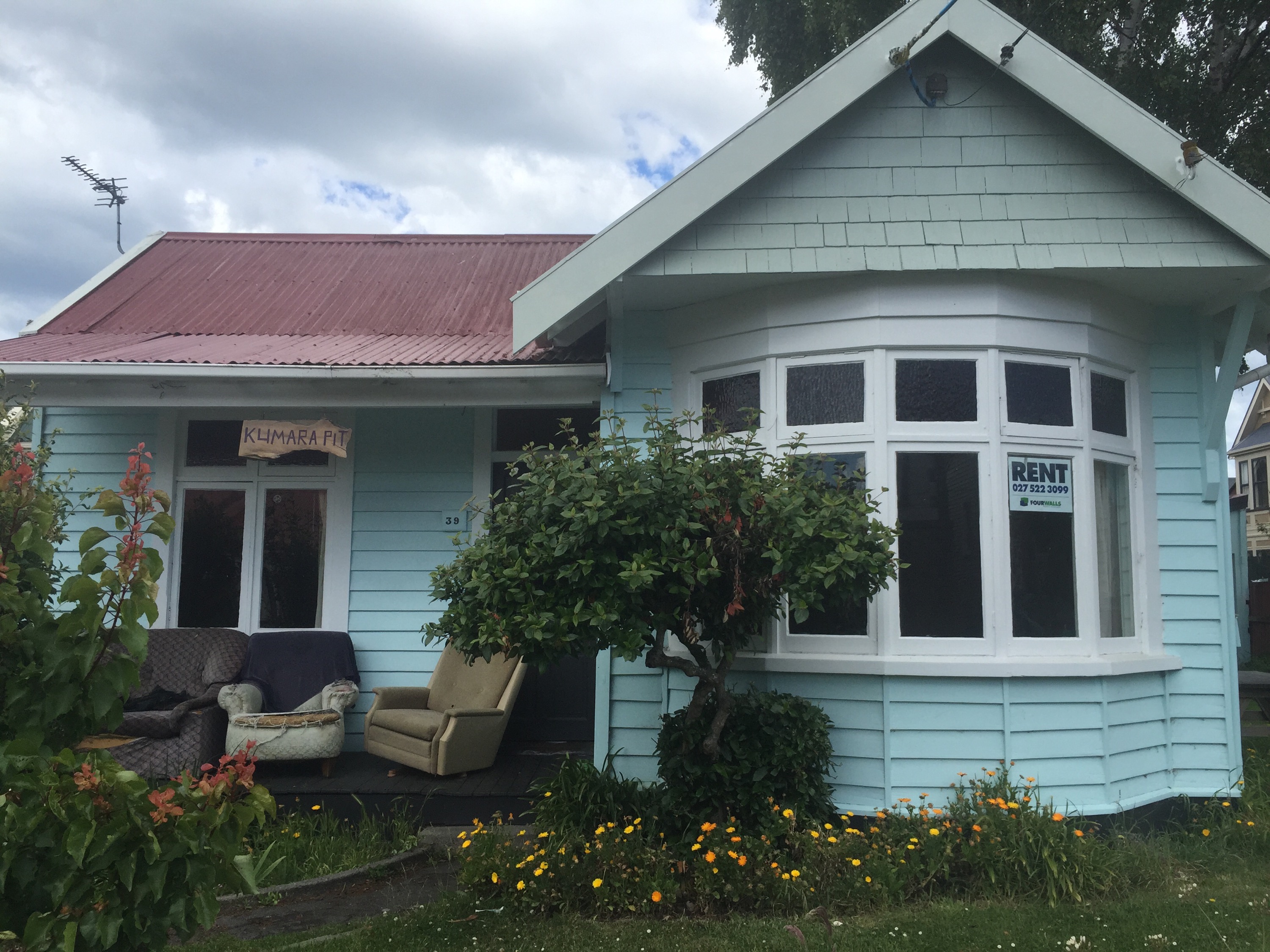
Kumara Pit on Howe Street
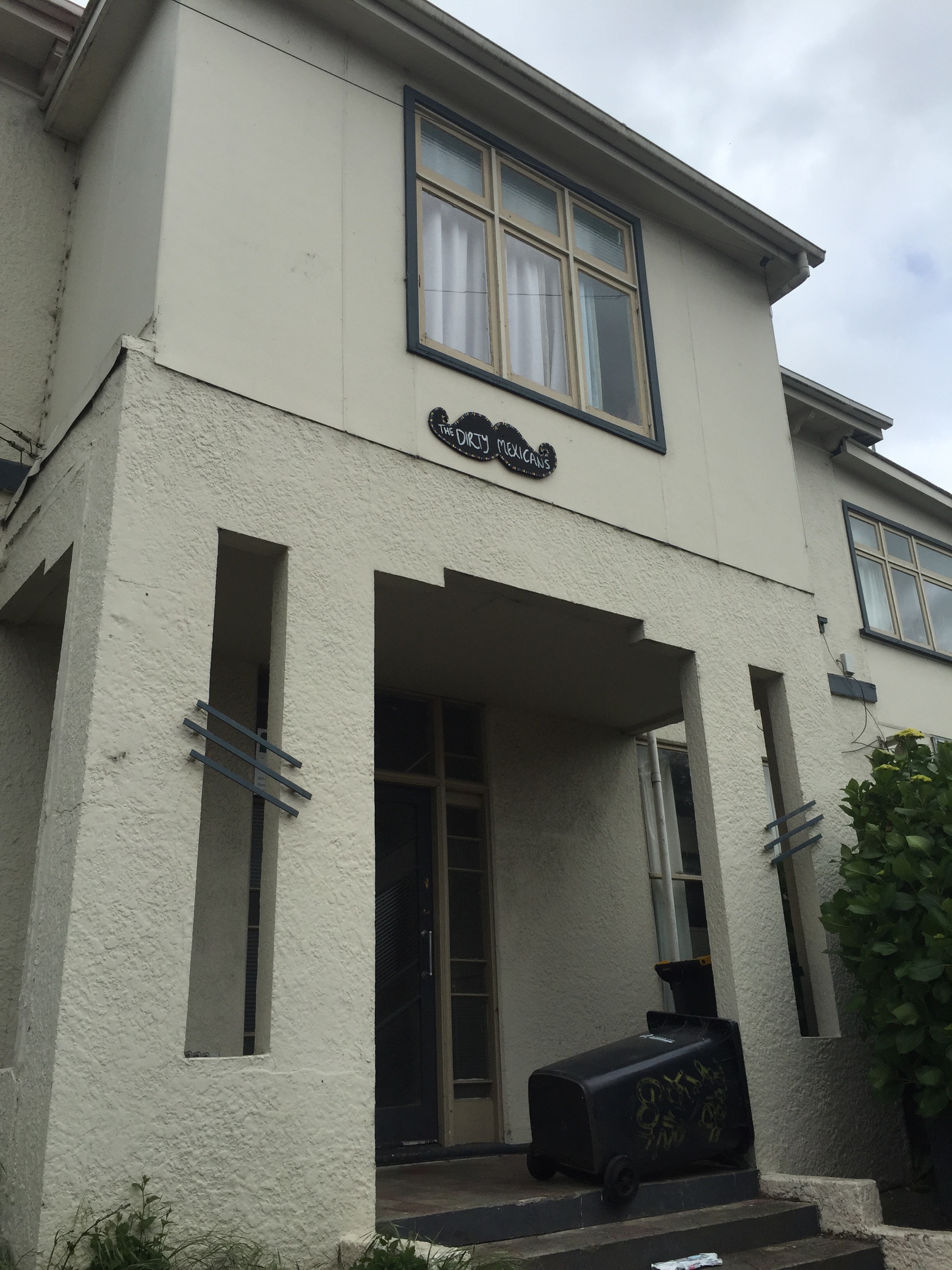
The Dirty Mexicans on Heriot Row
The Yeast Infection on Queen Street
New Zealand cultural iconography also features in Dunedin’s named flats. The familiar sun burst image and byline, “sure to rise”, from the Edmonds Cookery Book will be familiar to many. These feature here on sign, The Yeast Infection, a flat on Queen Street.
Take a look at this collection of Edmonds related images in the Sure to Rise collection curated by Lisa Alcott on DigitalNZ.

JK Rowling’s world reflected in Dunedin’s student flat naming culture
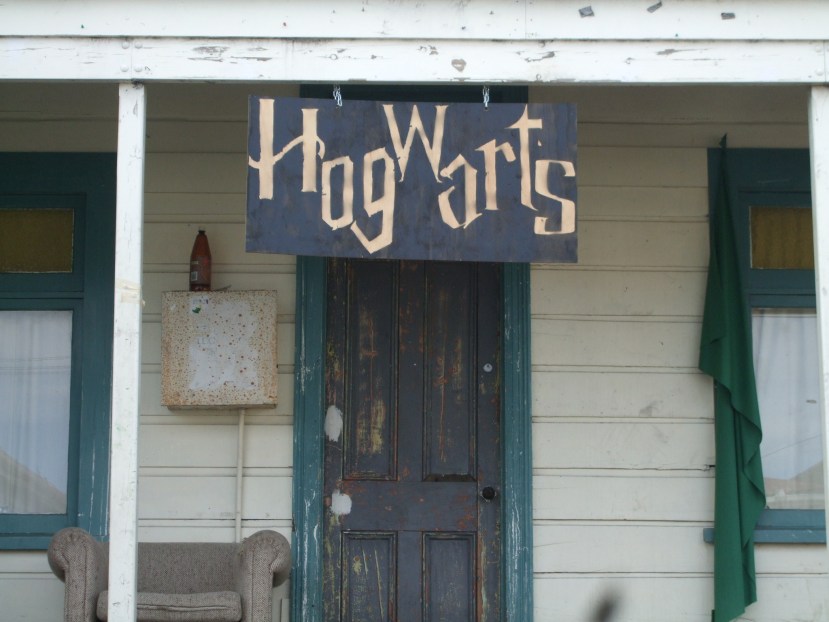
Hogwarts on Hyde Street (2009)
The Harry Potter series has hit a number of records in literary and film-making history. One record that is sure to be unique in the world is the influence of the series on house naming. Here in Dunedin, New Zealand there have been a number of flats that have been bestowed names with a Potteresque flavour.
Something I’ve noticed about the naming of student flats over the years is that popular culture plays a huge part in the naming, and there are examples of films and literature being a source of inspiration over the decades that flat naming has been a thing. Earlier examples are Smerch HQ (1960s), Hobbit (1970s), The Bordello (1990s) and, more recently Zeta.
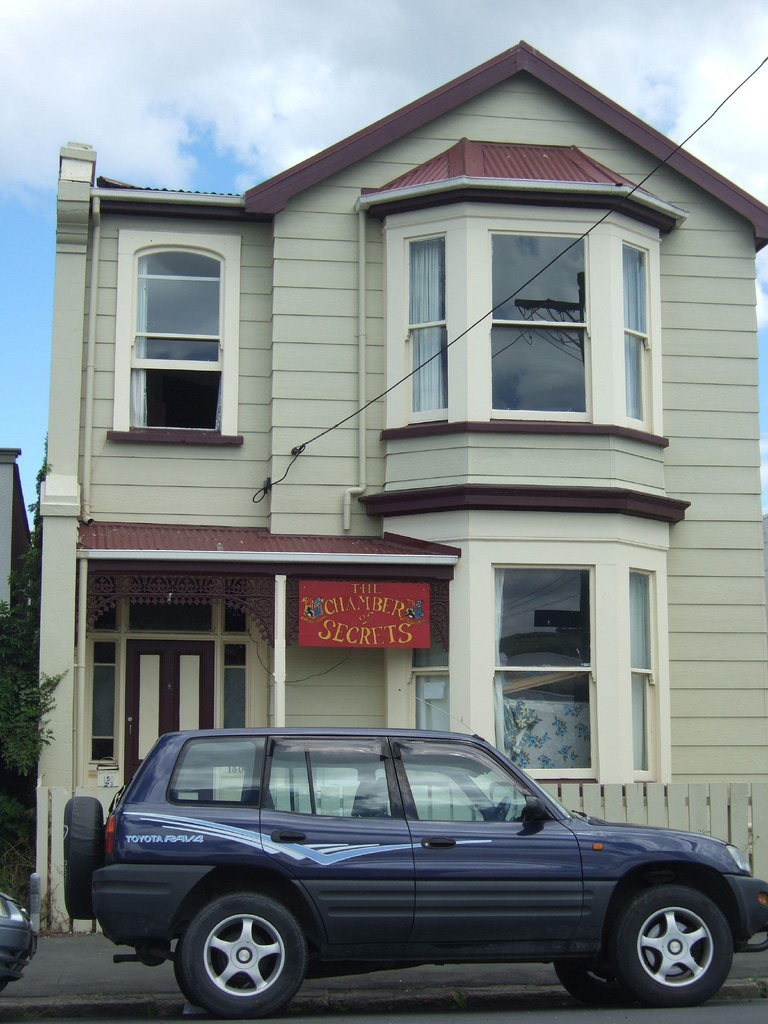
The first Potter inspired flat is the Chamber of Secrets (2007) from 150 Frederick Street. All Potter fans, the sign depicting the Hogwarts crest was painted by Will. The flat won the Te Roopu Maori “Best Name or Sign” in OUSA’s 2007 House & Garden awards. The judges thought the sign on this flat was “Fucking awesome!”. When the tenants of 2008 didn’t want the (frankly amazing) sign, the Chamber Boys took it with them. When I met up with them the sign was hanging on their lounge room wall.
In the Harry Potter series, the Shrieking Shack was commonly known as the most haunted house in England. In Dunedin the Shrieking Shack on Great King Street received its name in 2010 from Scott Honeyfield, a Potter fan, and his flatmates. Scott told me the age and character of the house suited the name. Interestingly the house is also well known for it’s toilet under the stairs that can not accommodate persons of height. The toilet under the stairs may allude to the shitty living conditions Harry Potter experienced while living with the Dursley’s on Privet Drive. I acknowledge this may be a bit of a reach on my part.
Since 2010 the Shrieking Shack has maintained its name with periods of absence of signage. The current iteration of the sign is the third in 5 years and resembles a white on black version of the Queen Street sign seen below which utilises the Harry Potter style lightening bolt font.
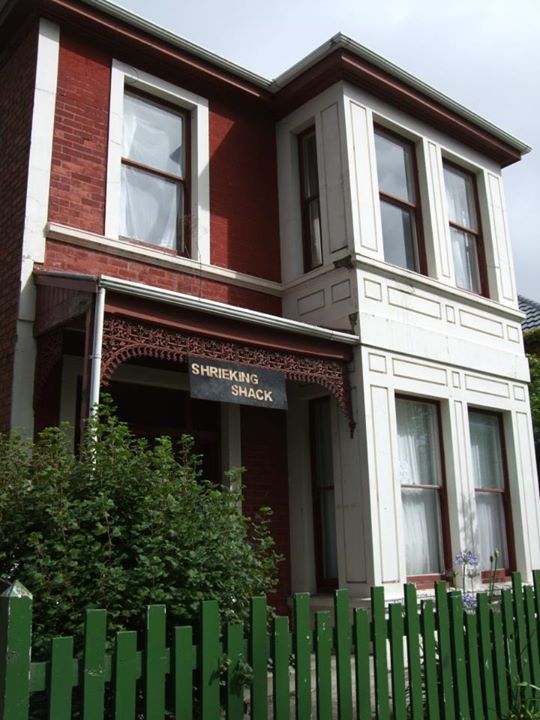
Shrieking Shack, Great King Street
Here’s a photo of the same flat from late in 2015. This sign replaced one which was stolen earlier in the year.
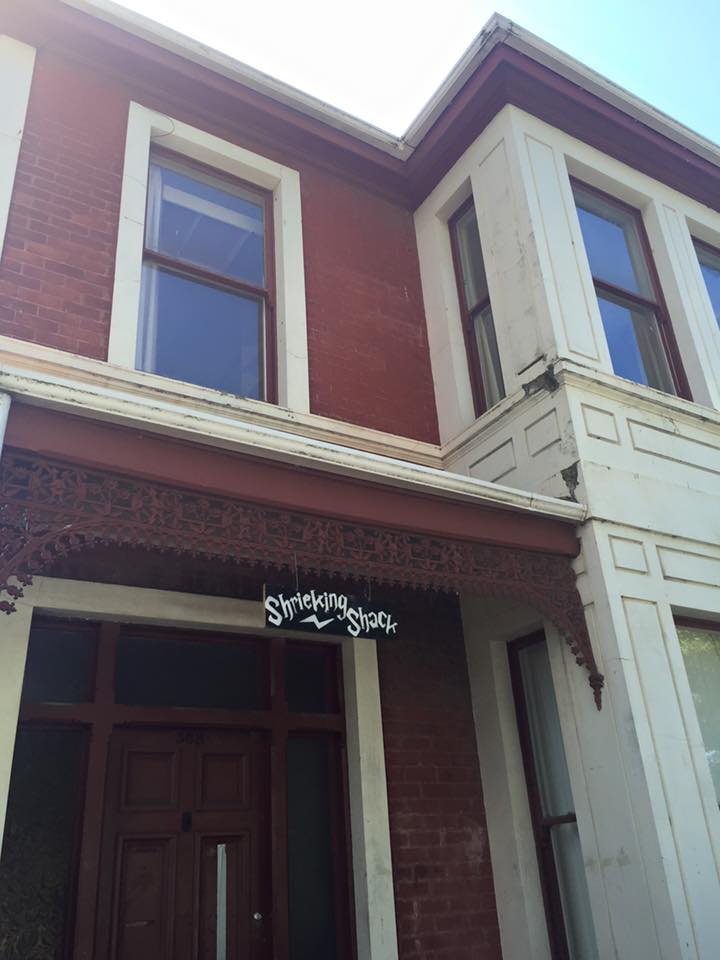
Shrieking Shack on Great King Street (2015)
The Shrieking Shack on Queen Street had a short life, this rendition offers a black on white interpretation of the current sign that can be seen on the Great King Street flat (above).
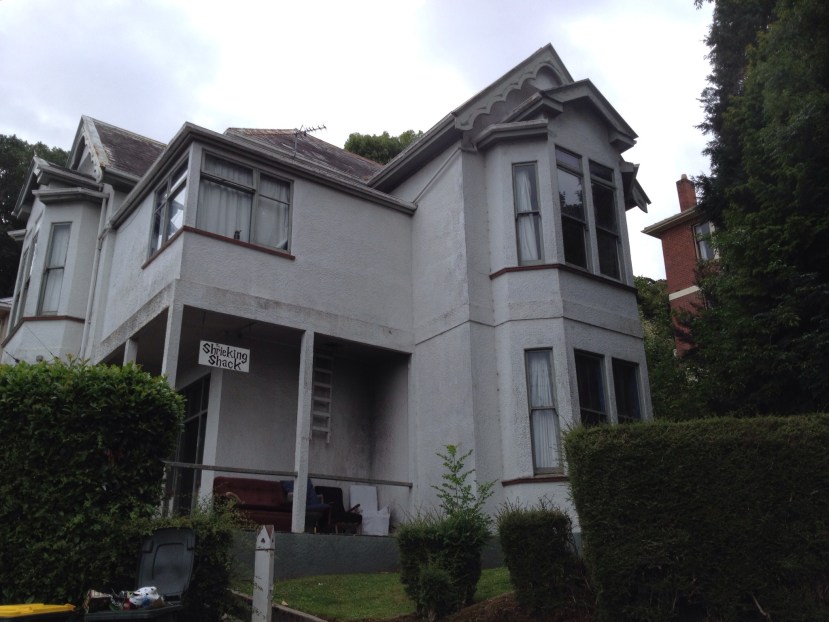
Shrieking Shack, Queen Street
In 2014 I was approached by a property developer, Tim Calder, who wanted to name a few of his flats on St David Street. After some discussion around potential ideas, he and his property manager Megan, decided on Harry Potter themed names. I visited the flats on Friday 27th November but only found one sign still in situ, Godric’s Hollow.
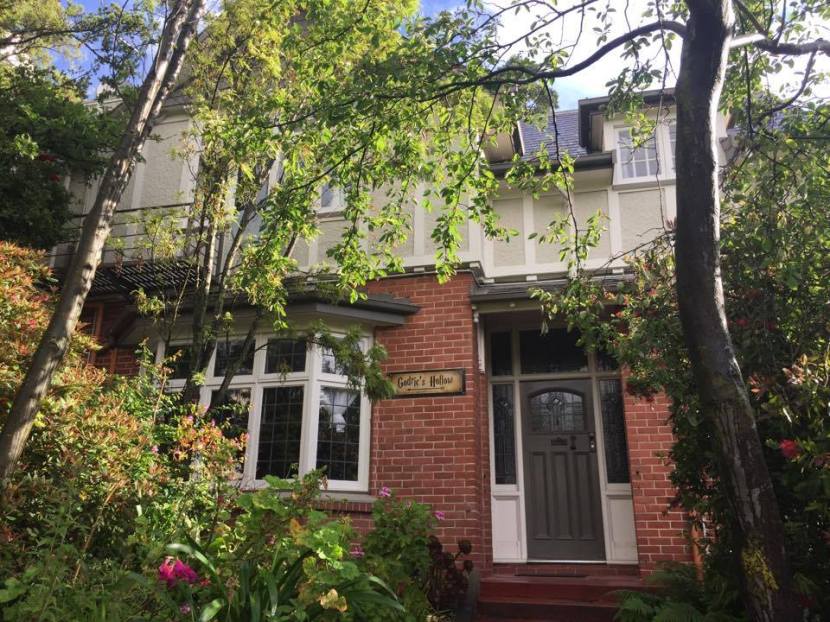
Godric’s Hollow, 114a St David Street
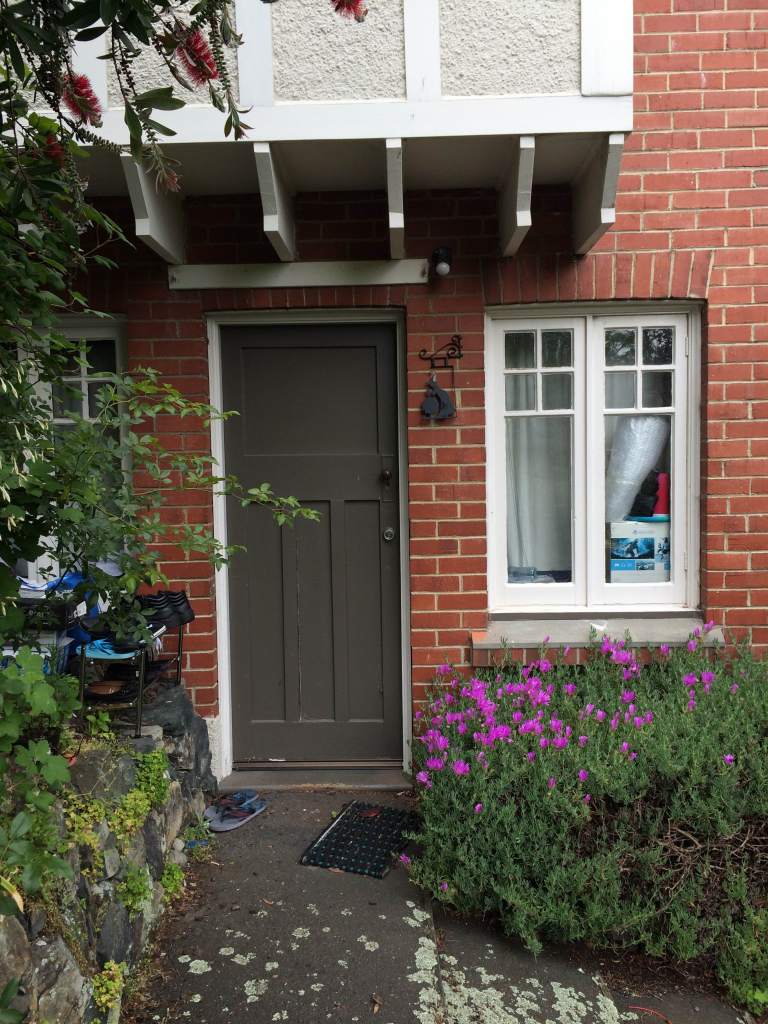
The Leaky Cauldron, 114b St David Street. Copyright Tim Calder. Used with permission.

Honeydukes, 114c St David Street. Copyright Tim Calder. Used with permission.
A shout out to the Dunedin Flat Names Project community on Facebook has connected me with people who have helped fill in some gaps in information (thank you!) and also revealed a further Potter inspired flat, the Three Broomsticks, sometimes also known as Three Broomsticks Racing. This flat is apparently on Great King Street but I’ve not yet seen the sign.
I’d be interested to hear from anyone who has lived in or is living in a flat with a name inspired by the Harry Potter…
Posted by Dunedin Flat Names Project on Wednesday, 25 November 2015
Mapping and meshblock data
Caveat: This post was written a year ago and since then Meshblock has been updated.
____________
Cameron Prebble @cameron_prebble has created a tool called Mashblock @MashblockNZ that displays data from Statistics NZ in a clean, digestible, graphic format. The data presented is from 2013 but there is an option via a drop down menu to select 2006 or 2001 data aswell.
@SarahLibrarina thanks for your support. All of our data is from the 2013 Census. We are working on improving our graphics for gender data.
— mashblock◆ (@MashblockNZ) June 14, 2014
Mashblock makes it simple for me to see what is happening within a meshblock and area unit in terms of demographic distribution. The main area units in Dunedin that have the highest student aged populations are:
North East valley, usual resident population
- 47.33% Males
- 52.67% Females
Dunedin North, 3465 usual resident population
- 44.46% Male [n=2,184]
- 55.54% Females [n=2,430]
Otago University, 5082 usual resident population
- 45.43% Males [n=2,310]
- 55.47% Females [n=2775]
Where it gets interesting for me is at meshblock level (the smallest level of measurment) and the gender demographics within that small area. Let’s take Castle Street as an example: The meshblock between Duke and Howe Streets has a fairly even distribution of male and female residents (54.84% males : 45.16% females). It should be noted that this meshblock includes a postgraduate hall of residence. However crossing Howe Street to the next meshblock reveals a much higher female population (30.77% males : 69.23% females). The adjoining mesh block which includes Selwyn College, also has a high female population (40% males : 60% females). Females are also in higher proportion in the two meshblocks in Leith Street Nth.
Meshblocks where we see more student aged males residing are west of George Street (70.83% males : 29.17% females), …
Areas that traditionally display a higher level of flat naming are Clyde Street and Hyde Streets. Looking at the gender distribution it is easy to see that on Clyde Street, south of Albany, there are significantly more males than females (62.50% males : 37.50% females) where Hyde Street has more of a balance (52.38% males : 47.62% females) in 2013, and has done so in 2006 and 2001 too.
Links
Hear Vaughan Davis talk about Mashblock, his ‘site of the week’ (16 May 2014)
The Pumped Pussy on Queen Street #flatnames
 Dunedin Flat Names Project